
Vegas Market Highlights Patterned Furniture Warm Earth Tones and Organic Shapes in a Collaborative Design Community
Vegas Market felt less like a reset and more like a collective exhale. After seasons of clean-lined minimalism, cool neutrals, and safe solids, showrooms leaned into rooms with more personality, more tactility, and a warmer sense of welcome.
The strongest signal was clear: interiors are moving toward comfort with character. Pattern showed up on sofas, chairs, ottomans, and case goods. Warm earth tones softened palettes that once leaned gray and stark. Organic shapes brought curve, movement, and ease to furniture silhouettes.
Just as noticeable was the energy between designers, makers, reps, buyers, stylists, and showroom teams. The most memorable moments came from conversation, shared sourcing, and the design community’s willingness to compare notes. Vegas Market was not only about what is new. It also showed how much better design becomes when people build ideas together.

Patterned furniture brought rooms back to life
One of the clearest takeaways from Vegas Market was the return of pattern as a main design feature, not just a finishing touch.
Pattern did not stay limited to pillows, rugs, or small accessories. It moved onto larger upholstered pieces, including:
Sofas with subtle stripes or woven repeats
Accent chairs in botanical and geometric fabrics
Ottomans covered in plaids, checks, and textured motifs
Benches with global-inspired prints
Dining chairs with small-scale upholstery patterns
This matters because patterned furniture changes the way a room feels. A solid sofa can anchor a space, but a patterned sofa can set the whole point of view. It adds rhythm. It creates movement. It gives a room a collected feel, even when the layout stays simple.
The patterns that felt most current were not loud for the sake of being loud. Many had a grounded quality. Think broken stripes, faded florals, tonal geometrics, hand-drawn marks, soft animal-inspired textures, and woven motifs that felt more artisanal than graphic.
The best examples worked because they had restraint. A chair might carry a strong print, but the color story stayed earthy. A sofa might show a stripe, but the scale felt tailored. Pattern was bold in placement, but thoughtful in execution.
Why pattern feels right now
After years of pared-back interiors, many clients and homeowners want rooms that feel personal again. Pattern helps tell that story without requiring a complete redesign.
A patterned chair can shift a quiet living room. A pair of printed ottomans can make a neutral space feel layered. A striped sofa can bridge traditional and modern pieces with surprisingly little effort.
Pattern also solves a common design problem. Many rooms have texture, but not enough contrast. Bouclé, linen, oak, stone, and plaster all bring softness, yet they can blur together if every item is solid. Pattern adds definition.
The strongest patterned pieces at market had one thing in common: they looked easy to live with. The goal was not perfection. It was personality.
Warm earth tones replaced cooler neutrals
Color at Vegas Market warmed up in a noticeable way. Cool grays and stark whites appeared less often as the main story. In their place came palettes inspired by soil, stone, spice, leather, clay, and sun-baked landscapes.
The most visible warm tones included:
Terracotta
Rust
Camel
Ochre
Sand
Mushroom
Olive
Umber
Warm taupe
Deep brown
Soft black with brown undertones
These colors gave showrooms a more relaxed and rooted feeling. They also paired beautifully with the rise in patterned upholstery. A rust-and-cream stripe felt fresh. A clay-toned floral looked layered instead of sweet. A brown geometric print gained depth when placed near travertine, oak, and aged brass.
Warm earth tones are useful because they sit between trend and timelessness. They feel current, but they also connect to materials people already trust: wood, leather, stone, linen, rattan, ceramic, and metal with softened finishes.

The warmth was layered, not flat
The most successful earth-tone rooms did not rely on one color. They used a family of related shades.
A living room vignette might combine a camel sofa, olive pillows, a rust-patterned chair, a dark walnut case piece, and a mushroom rug. None of the colors shouted. Together, they created depth.
That layered approach feels especially useful for real homes. Many people already own neutral anchor pieces. Designers can bring in warmth through upholstery, case goods, art, lighting, and accessories instead of starting from scratch.
Warm earth tones also make pattern easier to introduce. A high-contrast black-and-white pattern can feel sharp. The same pattern in cocoa, cream, and clay feels softer. That shift opens the door for clients who like pattern but worry it will overwhelm the room.
Organic shapes softened the room
Alongside pattern and warmth, organic shapes shaped much of the market story. Curves continued to appear across categories, but the newest pieces felt less like a trend and more like a design language.
Rounded sofas, kidney-shaped tables, arched cabinets, scalloped edges, curved chair backs, and irregular mirrors all pointed in the same direction. Rooms are becoming more relaxed. Furniture is moving away from rigid geometry and toward shapes that feel human, natural, and inviting.
Organic forms showed up in both statement pieces and quiet details:
Rounded coffee tables
Curved sofas and sectionals
Arched cabinets
Irregular mirrors
Sculptural lamps
Oval dining tables
Softer flow in seating areas
More conversational layouts
Architectural interest without heavy detail
Movement on otherwise simple walls
Artful shape in a small footprint
Easier circulation and a welcoming feel
Curves work well because they change how people experience a room. A curved sofa encourages conversation. A round table improves circulation. A softened arm on a chair makes the piece feel more approachable.
Organic shapes also connect naturally with the earth-tone palette. A rounded walnut table, a plaster lamp, a rust velvet chair, and a handmade ceramic bowl all speak the same visual language. The room feels designed, but not stiff.
The best shapes balanced comfort and structure
Not every curved piece works. Some can feel too novelty-driven. The strongest designs at Vegas Market balanced softness with structure.
A curved sofa still needs a tailored base. A sculptural chair still needs to sit well. A wavy console still needs enough simplicity to last beyond the season. The pieces that stood out had proportion, comfort, and restraint.
That balance points to a larger shift. Designers and buyers are not looking for trend pieces that photograph well for one moment. They are looking for furniture that feels fresh now and still makes sense years later.

The strongest rooms mixed all three trends
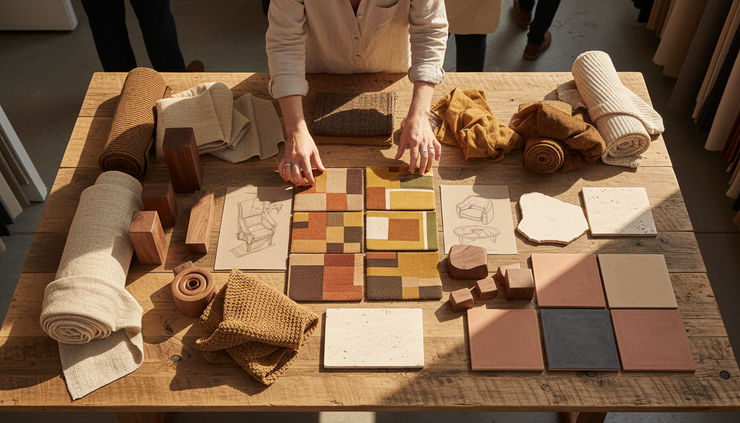
Patterned furniture, warm earth tones, and organic shapes each stood out on their own. The best showroom moments combined them.
A curved sofa in a warm camel fabric became more interesting with patterned pillows and a dark wood side table. A rust-patterned accent chair felt less busy next to a rounded stone cocktail table. An arched cabinet looked richer when styled with olive ceramics, woven trays, and textured art.
The mix worked because the trends support one another:
Pattern adds energy
Earth tones add warmth
Organic shapes add ease
Together, they create rooms that feel layered but not crowded.
For designers, this combination offers a practical path forward. A room does not need every trend in full force. One or two well-chosen pieces can shift the mood.
A safe living room can gain personality with patterned chairs. A cool neutral bedroom can warm up with clay, taupe, and walnut. A boxy dining area can soften with an oval table and curved-back chairs.
The key is editing. When pattern enters on a large piece, keep some surrounding forms quieter. When earth tones dominate, vary the textures so the palette does not feel flat. When shapes become sculptural, give them room to be seen.
Collaboration shaped the market experience
Beyond the products, Vegas Market highlighted something equally important: design is becoming more connected.
Showrooms were full of conversations about what clients are asking for, which materials are holding attention, how to mix vintage and new, and where color is heading next. Designers compared notes with makers. Retailers talked with reps about what buyers are ready to bring home. Stylists and showroom teams showed how pieces could live together, not only how they look on a line sheet.
That shared exchange is part of what makes market valuable. Trends do not become useful because they appear in a showroom. They become useful when the design community tests them, questions them, edits them, and adapts them to real homes.
A patterned sofa may look exciting on the floor, but a designer can help decide whether it belongs in a family room, a boutique lodging project, or a formal sitting area. A curved console may catch attention, but collaboration helps determine scale, finish, and placement. A warm rust palette may feel current, but a thoughtful design team can make it feel personal rather than predictable.
Good sourcing depends on shared knowledge
Designers often make better choices when they can learn from each other. One person may notice a new upholstery direction. Another may understand which colors clients are actually requesting. A showroom rep may know which pieces are gaining traction because they solve a real need, not just because they are visually striking.
That kind of exchange helps the whole community.
It also helps the end result. Collaboration can lead to more layered rooms, smarter selections, and fewer trend mistakes. A designer who talks with artisans, vendors, and peers gains a wider view of what is possible.
Vegas Market showed that collaboration is not a side note. It is part of the design process.
What these trends mean for upcoming interiors
The direction from Vegas Market suggests a move toward rooms that feel expressive, warm, and comfortable. The polished all-neutral room is making space for interiors with more texture, more story, and more visible design choices.
That does not mean every room needs a patterned sofa, terra-cotta walls, and a curved sectional. The strongest interpretation will be selective.
Here are a few grounded ways these ideas may show up in projects across the country:
A solid sofa paired with patterned swivel chairs
A neutral bedroom warmed with rust, olive, and mushroom textiles
A dining room centered on an oval table instead of a rectangle
A living room with a curved coffee table to soften a square layout
A traditional space refreshed with earthy geometric upholstery
A modern space warmed with wood, leather, and hand-shaped ceramics
The common thread is comfort with intention. Rooms are being asked to do more than look finished. They need to feel welcoming, personal, and flexible.
Pattern gives those rooms identity. Warm earth tones make them feel grounded. Organic forms invite people in.
The takeaway from Vegas Market
Vegas Market made one thing clear: the next wave of interiors is warmer, softer, and more expressive. Pattern is moving onto the main furniture pieces. Earth tones are bringing back richness and comfort. Organic shapes are changing the flow of rooms in subtle but meaningful ways.
The larger story is the collaboration behind it all. Designers, makers, showroom teams, and buyers are shaping these ideas together. That shared creative exchange keeps trends from feeling flat. It turns products into rooms, and rooms into places people want to live.
The best design coming out of this market moment will not follow every trend at once. It will choose wisely, mix thoughtfully, and leave space for personality.

Comments